


About the producer
About The Producer
Although Jacques-Frédéric (“Fréd”) Mugnier easily makes every critic’s short list of the most respected and influential winemakers in Burgundy, his path to the pinnacle of Burgundy was far from predictable. His professional training was in Petroleum Engineering, and he began his career with offshore oil projects in the North Sea and Africa. Nor did he come from a family of winemakers.
Fréd’s paternal forbearer and namesake Frédéric had been a successful distiller in Dijon in the middle of the 19th century, profiting greatly from the boom in absinthe. The business prospered, and Frédéric acquired the Château de Chambolle-Musigny in 1863 from the Morey-Mange family, along with a few hectares of vineyards. The family added the Clos de la Maréchale in 1902.
The vineyards were managed for a period by Maison Faiveley and later by Bernard Clair, the cask wine being sold off in barrel to négoces. Although Fréd’s father occasionally visited the Château, he remained very removed from the winemaking and the vineyards. It was not until 1984, at the age of almost thirty, that Fréd Mugnier took an interest in his vineyards and enrolled at the Lycée Viticole.
In the forty years since taking the helm as a relative novice, Fréd Mugnier has emerged as one of the dominant influences in Burgundy, producing some of the most elegant and compelling examples of Pinot Noir.
Domaine JF Mugnier’s vineyards are spread across some of Burgundy’s most renowned appellations, including Musigny, Bonnes Mares, Chambolle-Musigny, and Nuits-Saint-Georges, including the legendary monopole Clos de la Maréchale. The estate covers approximately 14 hectares of vineyards. Mugnier’s approach to viticulture is defined by a philosophy of minimal intervention and respect for the environment. While he employs organic practices, he rejects a dogmatic approach. For example, he avoids copper sulfate, which is used in organic viticulture, preferring less invasive chemical treatments that are environmentally more benign.
Pruning and canopy management are executed with precision to optimize sun exposure and air circulation, which are crucial for the health of the vines and the development of grape quality. Mugnier places great emphasis on maintaining low yields, typically around 30-35 hectoliters per hectare, to ensure that the vines produce fruit with concentrated flavors and balanced acidity.
The winemaking at Domaine JF Mugnier is a seamless extension of the meticulous care given to the vineyards. Mugnier’s philosophy centers on allowing the natural expression of the terroir to shine through, with minimal intervention during the vinification process. Harvesting is done by hand, ensuring that only the best clusters are selected. Once in the winery, the grapes are sorted meticulously before fermentation, which is carried out with ambient yeasts. Temperature control during fermentation is carefully monitored to ensure that the wines develop the desired flavors and textures without becoming overly extracted. Aging takes place in French oak barrels, with a judicious use of new oak (typically around 20-30%) to avoid overpowering the wine’s inherent qualities. The aging period varies by cuvée, but it generally lasts between 12 to 18 months.
Jacques-Frédéric MUGNIER
Burgundy
History
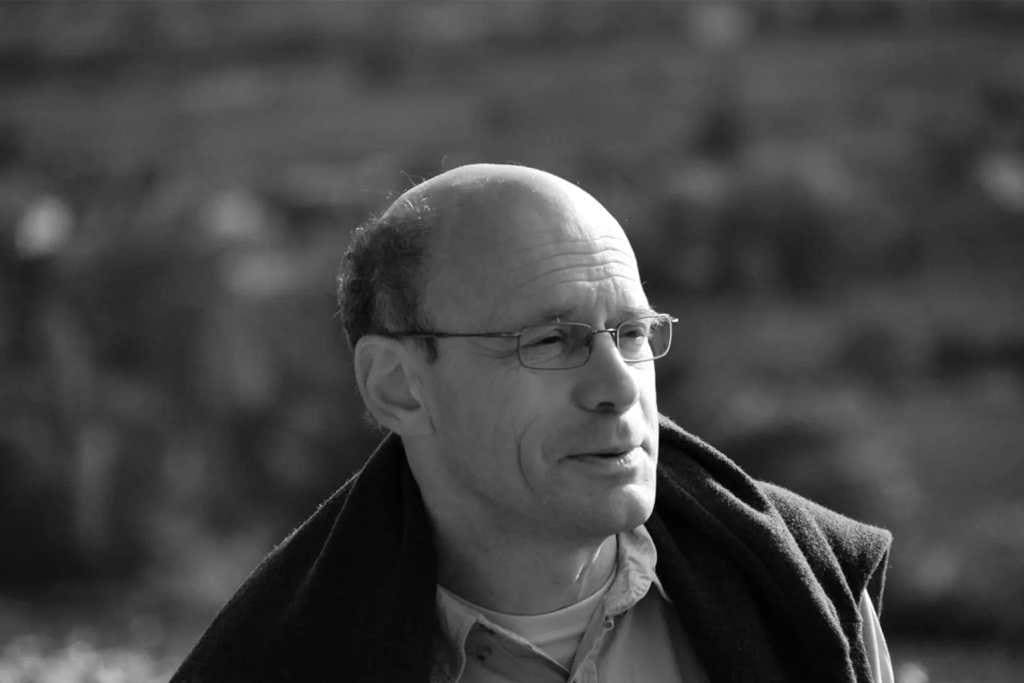
Although Jacques-Frédéric (“Fréd”) Mugnier easily makes every critic’s short list of the most respected and influential winemakers in Burgundy, his path to the pinnacle of Burgundy was far from predictable. His professional training was in Petroleum Engineering, and he began his career with offshore oil projects in the North Sea and Africa. Nor did he come from a family of winemakers. Fréd’s paternal forbearer and namesake Frédéric had been a successful distiller in Dijon in the middle of the 19th century, profiting greatly from the boom in absinthe. The business prospered, and Frédéric acquired the Château de Chambolle-Musigny in 1863 from the Morey-Mange family, along with a few hectares of vineyards. The family added the Clos de la Maréchale in 1902. The vineyards were managed for a period by Maison Faiveley and later by Bernard Clair, the cask wine being sold off in barrel to négoces. Although Fréd’s father occasionally visited the Château, he remained very removed from the winemaking and the vineyards. It was not until 1984, at the age of almost thirty, that Fréd Mugnier took an interest in his vineyards and enrolled at the Lycée Viticole. In the forty years since taking the helm as a relative novice, Fréd Mugnier has emerged as one of the dominant influences in Burgundy, producing some of the most elegant and compelling examples of Pinot Noir.
Terroir
Domaine JF Mugnier’s vineyards are spread across some of Burgundy’s most renowned appellations, including Musigny, Bonnes Mares, Chambolle-Musigny, and Nuits-Saint-Georges, including the legendary monopole Clos de la Maréchale.
Viticulture
Mugnier’s approach to viticulture is defined by a philosophy of minimal intervention and respect for the environment. While he employs organic practices, he rejects a dogmatic approach. For example, he avoids copper sulfate, which is used in organic viticulture, preferring less invasive chemical treatments that are environmentally more benign. Pruning and canopy management are executed with precision to optimize sun exposure and air circulation, which are crucial for the health of the vines and the development of grape quality. Mugnier places great emphasis on maintaining low yields, typically around 30-35 hectoliters per hectare, to ensure that the vines produce fruit with concentrated flavors and balanced acidity.
Vinification
The winemaking at Domaine JF Mugnier is a seamless extension of the meticulous care given to the vineyards. Mugnier’s philosophy centers on allowing the natural expression of the terroir to shine through, with minimal intervention during the vinification process. Harvesting is done by hand, ensuring that only the best clusters are selected. Once in the winery, the grapes are sorted meticulously before fermentation, which is carried out with ambient yeasts. Temperature control during fermentation is carefully monitored to ensure that the wines develop the desired flavors and textures without becoming overly extracted. Aging takes place in French oak barrels, with a judicious use of new oak (typically around 20-30%) to avoid overpowering the wine’s inherent qualities. The aging period varies by cuvée, but it generally lasts between 12 to 18 months.
Wines
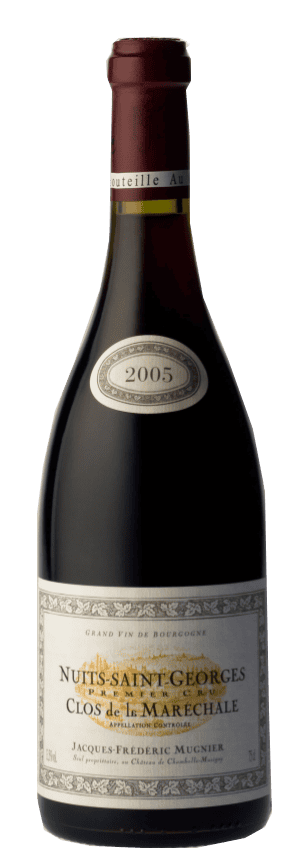
Nuits-Saint-Georges 1er Cru, Clos de la Maréchale (rouge)
- LOCALITY: FRANCE – Burgundy – Côte de Nuits
- APPELLATION: Nuits-Saint-Georges 1er Cru, Clos de la Maréchale
- GRAPE VARIETY: Pinot Noir
- WINEMAKER: Jacques-Frédéric Mugnier
- VINEYARD: 9.55 ha. (the largest monopole parcel in Côte d’Or). Planted in the 1910s and 1980s over limestone-clay soils with oolithic limestone pebbles.
- VITICULTURE: Organic (not certified).
- WINEMAKING: 100% de-stemmed. Fermented over ambient yeasts and macerated for 15 to 20 days in open wooden vats.
- AGING: Aged for 18 months in barrels (15% new oak). Racked twice. Blend in April into stainless steel tanks and aged for 3 additional months.
- BOTTLING: Bottled in June-July.
Nuits-Saint-Georges 1er Cru, Clos de la Maréchale (blanc)
- LOCALITY: FRANCE – Burgundy – Côte de Nuits
- APPELLATION: Nuits-Saint-Georges 1er Cru, Clos de la Maréchale
- GRAPE VARIETY: Chardonnay
- WINEMAKER: Jacques-Frédéric Mugnier
- VINEYARD: 0.6 ha. originally planted in 1964 but over-grafted to Chardonnay in 2004. Limestone and clay soil with pebbles of oolithics limestone.
- VITICULTURE: Organic (not certified).
- WINEMAKING: Directly pressed grapes. Slow fermentation over ambient yeasts in stainless steel tank.
- AGING: Aged for 12 months on fine lees in used barrels.
- BOTTLING: Bottled in January.
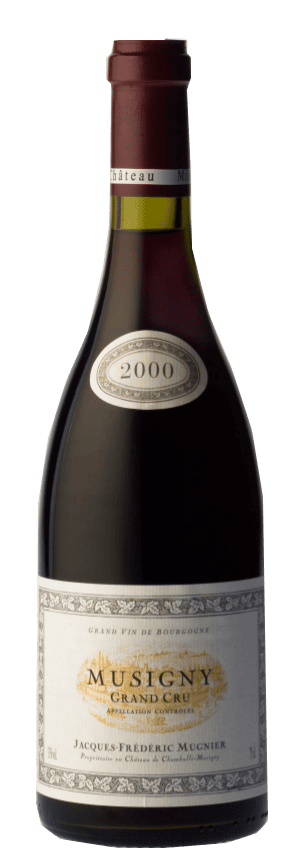
Musigny Grand Cru
- LOCALITY: FRANCE – Burgundy – Côte de Nuits
- APPELLATION: Musigny Grand Cru
- GRAPE VARIETY: Pinot Noir
- WINEMAKER: Jacques-Frédéric Mugnier
- VINEYARD: 1.14 ha. planted in 1947 and 1962 in Chambolle-Musigny. Situated above the Clos de Vougeot between Les Amoureuses and Les Échézeaux; entirely on the part known as Grand-Musigny. Marl and limestone soils at top of the hill and more rocky well-draining soils at the bottom. 280-300m elevation.
- VITICULTURE: Organic (not certified).
- WINEMAKING: 100% de-stemmed. Fermented over ambient yeasts and macerated for 15 to 20 days in open wooden vats.
- AGING: Aged for 18 months in barrels (15% new oak). Racked twice. Blend in April into stainless steel tanks and aged for 3 additional months.
- BOTTLING: Bottled in June-July.
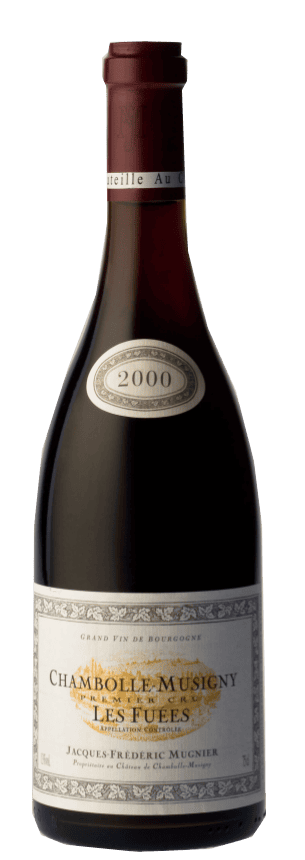
Chambolle-Musigny 1er Cru, Les Fuées
- LOCALITY: FRANCE – Burgundy – Côte de Nuits
- APPELLATION: Chambolle-Musigny 1er Cru, Les Fuées
- GRAPE VARIETY: Pinot Noir
- WINEMAKER: Jacques-Frédéric Mugnier
- VINEYARD: Planted in 1960. North of the village, upper slope and border the southern side of Bonnes-Mares appellation.
- VITICULTURE: Organic (not certified).
- WINEMAKING: 100% de-stemmed. Fermented over ambient yeasts and macerated for 15 to 20 days in open wooden vats.
- AGING: Aged for 18 months in barrels (15% new oak). Racked twice. Blend in April into stainless steel tanks and aged for 3 additional months.
- BOTTLING: Bottled in June-July.

Chambolle-Musigny 1er Cru, Les Amoureuses
- LOCALITY: FRANCE – Burgundy – Côte de Nuits
- APPELLATION: Chambolle-Musigny 1er Cru, Les Amoureuses
- GRAPE VARIETY: Pinot Noir
- WINEMAKER: Jacques-Frédéric Mugnier
- VINEYARD: 0.53 ha. planted in 1954, 1956 and 1966 over soil of red clay, 30 to 50 cm deep on limestone bedrock.
- VITICULTURE: Organic (not certified).
- WINEMAKING: 100% de-stemmed. Fermented over ambient yeasts and macerated for 15 to 20 days in open wooden vats.
- AGING: Aged for 18 months in barrels (15% new oak). Racked twice. Blend in April into stainless steel tanks and aged for 3 additional months.
- BOTTLING: Bottled in June-July.
Chambolle-Musigny
- LOCALITY: FRANCE – Burgundy – Côte de Nuits
- APPELLATION: Chambolle-Musigny
- GRAPE VARIETY: Pinot Noir
- WINEMAKER: Jacques-Frédéric Mugnier
- VINEYARD: 1.3 ha. planted in 1952 and 1998. From two lieux-dit: La Combe d’Orvaux and Les Plantes, both facing east, with mostly limestone soil.
- VITICULTURE: Organic (not certified).
- WINEMAKING: 100% de-stemmed. Fermented over ambient yeasts in open wooden vats.
- AGING: Aged for 18 months in barrels (15% new oak). Racked twice. Blend in April into stainless steel tanks and aged for 3 additional months.
- BOTTLING: Bottled in June-July.
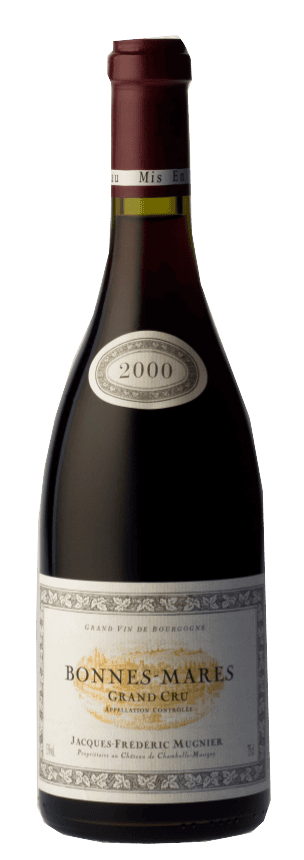
Bonnes-Mares Grand Cru
- LOCALITY: FRANCE – Burgundy – Côte de Nuits
- APPELLATION: Bones-Mares Grand Cru
- GRAPE VARIETY: Pinot Noir
- WINEMAKER: Jacques-Frédéric Mugnier
- VINEYARD: 0.36 ha. planted in 1961, 1980 and 1988 in Chambolle-Musigny. Narrow strip of vineyard along the top of the slope.
- VITICULTURE: Organic (not certified).
- WINEMAKING: Fully de-destemmed grapes are fermented over ambient yeasts in open wooden vats, with total cuvaison for 20 days.
- AGING: Aged for 18 months in barrels (15% new oak). Racked twice. Blend in April into stainless steel tanks and aged for 3 additional months.
- BOTTLING: Bottled in June-July.
